• Skip to primary navigation
  • Skip to main content
  • Skip to primary sidebar
  • Skip to footer
  • Home
  • History
  • Partners
  • Contact
  • News & Events
  • Restored Asian Films

Jean Quiambao

Mya Ganaing (aka Mya Ga Naing) [The Emerald Jungle]

Restored Asian Films

Back to Film List
Back
Suggest Edits
Edit
Suggest New Entry
New

Mya Ganaing (aka Mya Ga Naing) [The Emerald Jungle]

Film Synopsis

Deep in the jungle, where tigers, snakes and elephants are at home, U Pho Thwa owns a sawmill. With his delightful granddaughter Myint Myint he lives a little further off in a comfortable villa. One day, Myint Myint takes her horse for a ride, accompanied by a houseboy. She has a riding accident and is saved from drowning in the river by a good-looking young man from Rangoon. All too soon, Myint Myint and Chit Shwe have to part again: he is on his way back to the city. But the situation at home isn’t good: his rich father has lost his heart to a woman who is two-timing him. Chit Shwe is full of despair about his family’s loose morals. Furthermore, he is in a financial crisis. Since, in the circumstances, he doesn’t want to ask his father for a loan, he cooks up a plan with a shady friend, an alcoholic. There has just been a murder in town, the search warrant for the murderer promises 5000 Kyat as a reward. Chit Shwe decides to pretend that he is the murderer, in order to get the reward later. Momentarily, a wild group of determined policemen are chasing the innocent man. Chit Shwe flees from his pursuers – like an early James Bond – using every available mode of transportation. He finally escapes – in a hot air ballon. The winds play God and, after having withstood a few thunderstorms, he finally lands close to the sawmill. Except that he has ended up in the encampment of the teakwood thieves. Even though they receive him graciously, the well-born young man is not keen to join the group whose members are clad in tigerskin jackets. They let him go and show him the road back to the city which, as it happens, leads past the sawmill. Chit Shwe and Myint Myint are happy to see each other again, because they have loved each other since their first meeting in the river. And yet, she doesn’t trust him, fearing that he belongs to the group of thieves who want to liquidate her and her grandfather. Very soon, he has the opportunity to prove his loyalty. The teakwood thieves invade the sawmill on elephants, trampling down buildings in a spectacular attack. There is much fighting and shooting; even fearless Myint Myint (wearing a small, white flower in her hair) takes up arms. In the end they defeat the robbers, but grandpa has lost his life in the struggle. No, she isn’t all alone in the world, says Chit Shwe consolingly, he is there for her, after all. And so finally, nothing stands in the way of a happy end. A jungle patrol, who had arrived at the sawmill shortly after the attack, tells Chit Shwe about his father’s search for him after his bad stepmother has finally run away with her lover. There’s more: his father has promised a reward to anyone who has information about his son’s whereabouts.
And so Myint Myint and Chit Shwe make their way to the city and, after a hundred adventures in the jungle arrive in a very urban Yangon. The father and a writer friend are already expecting the couple for tea in a beautifully appointed garden, a pinscher, decorated with a bow, provides the entertainment. Chit Shwe’s father is very proud of his self-willed son, on whom the hero in the novel Mya Ganaing will be based.

[http://www.memoryfilmfestival.org/mya-ganaing/]

Video

Film Details

Alternate Titles: The Emerald Jungle

Language: Burmese

Original Production Country: Myanmar (Burma)

Original Release Year: 1934

Original Elements Held By: Myanmar National Film Archive, Yangon; Arsenal Archives, Berlin

Original Distribution Company:

Production Company: A1 Film

Executive Producer:

Producer:

Director: Maung Tin Maung (aka Tin Maung, aka A1 Tin Maung)

Writer: 

Cinematography: U Myat Kyaw & U Ba Thaung

Editor: 

Sound Editor:

Music/Score: Silent with intertitles in 1934, (dialogue & music added in 1970)

Narrator:

Other Credits: Cast: Daw Myint Myint, U Chit Shwe, U Ba Saw Gyi

Aspect Ratio:

Colour System: B/W

Duration: 97 mins

Restoration Details

Status: Released

Country Where Restored: Italy

Restoration Release Date: 13 August 2016

Country Restoration First Screened: Switzerland

Lab Image Restored By: L’Immagine Ritrovata

Lab Audio Restored By: 

Archive Partner(s) in Restoration: Myanmar National Film Archive, Yangon; Arsenal-Institut für Film und Videokunst, Berlin

Restored Elements Held By: 

Restoration Funded By: MEMORY! Cinema (France), Cultural Preservation Programme of the Federal Foreign Office of Germany Goethe-Institut Myanmar (Germany), Swiss Development Cooperation & Swiss Embassy in Myanmar (Switzerland), Cineteca di Bologna and L’Immagine Ritrovata (Italy) , French Embassy in Myanmar (France) and Myanmar Film Heritage Society (Myanmar)

Restoration Premiere: Festival del Film Locarno, Switzerland, 13 August 2016

Screening Rights Held By: 

Genre
Awards
Film Facts
Website
Related Articles
  • Reel struggle: unearthing Thai cinema’s lost classics
Related Films
Educational Materials
Info Source

Memory Film Festival; Mizzima; AWRA

女は二度生まれる (Onna wa Nido Umareru) [Women Are Born Twice (aka A Geisha’s Diary)]

Restored Asian Films

Back to Film List
Back
Suggest Edits
Edit
Suggest New Entry
New

女は二度生まれる (Onna wa Nido Umareru) [Women Are Born Twice]

Film Synopsis

The first of Kawashima’s Daiei Studio collaborations with Wakao centers on the life of a Tokyo geisha named Koen and her relationships with various men. Starting out with no singing or dancing talents, the young, free-spirited Koen is initially eager to please and happy to do what she is told. With time and experience, however, she gradually begins to notice a change in herself and questions what she wants out of life. Played with subtle shifts in emotion, Wakao’s delicate performance earned her the Kinema Junpo Award and Blue Ribbon Award for Best Actress.

“Something happened in the inner human experience. We don’t know what that was, but something definitely happened. That is the theme of this film.” – Yuzo Kawashima

Video

Film Details

Alternate Titles: Women Are Born Twice (aka A Geisha’s Diary)

Language: Japanese

Original Production Country: Japan

Original Release Year: 1961

Original Elements Held By: 

Original Distribution Company: 
Daiei

Production Company: Daiei

Executive Producer:

Producer:

Director: Yuzo Kawashima

Writer: 

Cinematography: 

Editor: 

Sound Editor:

Music/Score: 

Narrator:

Other Credits: Cast: Ayako Wakao, Jun Fujimaki, Kyu Sazanka, Frankie Sakai

Aspect Ratio:

Colour System: Colour

Colour Process: 

Duration: 99 mins

Restoration Details

Status: Released

Country Where Restored: Portugal

Restoration Release Date:

Country Restoration First Screened: 

Lab Image Restored By: Cineric, Portugal

Lab Audio Restored By: 

Archive Partner(s) in Restoration: 

Restored Elements Held By: 

Restoration Funded By: Kadokawa Corporation

Restoration Premiere: Japan Society, NYC, 2 December, 2017

Screening Rights Held By: Kadokawa Corporation

Genre
Awards
Film Facts
Website
Related Articles
Related Films
Educational Materials
Info Source
Japan Society; AWRA

Shitoyakana Kedamono [The Graceful Brute]

Restored Asian Films

Back to Film List
Back
Suggest Edits
Edit
Suggest New Entry
New

Shitoyakana Kedamono [The Graceful Brute]

Film Synopsis
Video

Film Details

Alternate Titles: The Graceful Brute

Language: 

Original Production Country: Japan

Original Release Year: 1962

Original Elements Held By: 

Original Distribution Company:

Production Company: Daiei Studios

Executive Producer:

Producer:

Director: Yuzo Kawashima

Writer: 

Cinematography: 

Editor: 

Sound Editor:

Music/Score: 

Narrator:

Other Credits:

Aspect Ratio:

Colour System:

Duration: 96 mins

Restoration Details

Status: Released

Country Where Restored: Portugal

Restoration Release Date:

Country Restoration First Screened: 

Lab Image Restored By: Cineric, Portugal

Lab Audio Restored By: 

Archive Partner(s) in Restoration: 

Restored Elements Held By: 

Restoration Funded By: Kadokawa Corp

Restoration Premiere: 

Screening Rights Held By: Kadokawa Corp

Genre
Awards
Film Facts
Website
Related Articles
Related Films
Educational Materials
Info Source

AWRA

雁の寺 (Gan no Tera) [The Temple of Wild Geese]

Restored Asian Films

Back to Film List
Back
Suggest Edits
Edit
Suggest New Entry
New

雁の寺 (Gan no Tera) [The Temple of Wild Geese]

Film Synopsis

Living in a Buddhist temple famous for its paintings of wild geese, the young disciple Jinen is cruelly bossed around by the lascivious chief priest, who indulges his sexual desires for the hired mistress Satoko (Wakao) under their shared roof. In a mixture of pity and fascination, Satoko seeks out the silent, tortured Jinen and learns of their shared impoverished upbringings, drawing her closer to him. Kawashima’s sharply observed and ironic adaptation of Tsutomu Minakami’s novel is exquisitely shot in widescreen black and white by cinematographer Hiroshi Murai (The Sword of Doom).

“The making of this film was incredibly helpful in figuring out what my goals are to be for my direction. Concurrently, I want to thank Hiroshi Murai behind the camera. That is because Murai made me sorry that I was not a director who saw films from a painterly perspective. He let me realize this.” – Yuzo Kawashima.

Video

Film Details

Alternate Titles: The Temple of Wild Geese

Language: Japanese

Original Production Country: 

Original Release Year: 1962

Original Elements Held By: 

Original Distribution Company: Daiei

Production Company: Daiei 

Executive Producer:

Producer:

Director: Yuzo Kawashima

Writer: 

Cinematography: Hiroshi Murai

Editor: 

Sound Editor:

Music/Score: 

Narrator:

Other Credits: Cast: Ayako Wakao, Isao Kimura, Kuniichi Takami, Masao Mishima

Aspect Ratio: 2.35:1

Colour System: B/W

Duration: 97 mins

Restoration Details

Status: Released

Country Where Restored: Portugal

Restoration Release Date: 2 December 2017

Country Restoration First Screened: United States

Lab Image Restored By: Cineric, Portugal

Lab Audio Restored By: 

Archive Partner(s) in Restoration: 

Restored Elements Held By: 

Restoration Funded By: Kadokawa Corporation

Restoration Premiere: Japan Society, NYC, 2 December 2017

Screening Rights Held By: Kadokawa Corporation

Genre
Awards
Film Facts
Website
Related Articles
Related Films
Educational Materials
Info Source
Japan Society; AWRA

Chikamatsu monogatari [A Tale From Chikamatsu]

Restored Asian Films

Back to Film List
Back
Suggest Edits
Edit
Suggest New Entry
New

Chikamatsu monogatari [A Tale From Chikamatsu]

Film Synopsis

Ishun is a wealthy, but unsympathetic, master printer who has wrongly accused his wife and best employee of being lovers. To escape punishment, the accused run away together, but Ishun is certain to be ruined if word gets out.

Video

Film Details

Alternate Titles: A Tale From Chikamatsu / Crucified Lovers (US)

Language: 

Original Production Country: Japan

Original Release Year: 1954

Original Elements Held By: 

Original Distribution Company: Daiei Film

Production Company: 

Executive Producer:

Producer: Masaichi Nagata

Director: Kenji Mizoguchi

Writer: Yoshikata Yoda, Matsutarō Kawaguchi Yoshikata; Chikamatsu Monzaemon (story)

Cinematography: Kazuo Miyagawa

Editor: Kanji Sugawara

Sound Editor:

Music/Score: Fumio Hayasaka, Tamezô Mochizuki

Narrator:

Other Credits: Cast: Kazuo Hasegawa as Mohei; Kyōko Kagawa as Osan; Eitarō Shindō as Ishun; Eitarō Ozawa as Sukeemon; Yōko Minamida as Otama; Haruo Tanaka as Gifuya Dōki; Chieko Naniwa as Okō; Ichirō Sugai as Genbei; Tatsuya Ishiguro as Isan; Hiroshi Mizuno as Kuroki; Hisao Tōake as Morinokoji; Ikkei Tamaki as Jūshirō Umegaki; Kimiko Tachibana as Umetatsu Akamatsu; Keiko Koyanagi as Okaya; Sayako Nakagami as Osono (https://en.wikipedia.org/wiki/The_Crucified_Lovers#Cast)

Aspect Ratio:

Colour System: B/W

Duration: 102 mins

Restoration Details

Status: Released

Country Where Restored: United States

Restoration Release Date:

Country Restoration First Screened: 

Lab Image Restored By: Cineric, NY

Lab Audio Restored By: 

Archive Partner(s) in Restoration: 

Restored Elements Held By: 

Restoration Funded By: Kadokawa and The Film Foundation

Restoration Premiere: 

Screening Rights Held By: Kadokawa Corporation

Genre
Awards
Film Facts
Website
Related Articles
Related Films
Educational Materials
Info Source
Wikipedia; AWRA

Sanshô Dayû [Sansho The Bailiff]

Restored Asian Films

Back to Film List
Back
Suggest Edits
Edit
Suggest New Entry
New

Sanshô Dayû [Sansho the Bailiff]

Film Synopsis

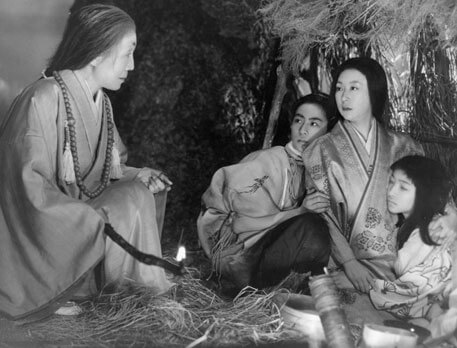
Sansho the Bailiff is both one of Mizoguchi’s most accessible works and one of his most sublime, a highpoint among postwar Japan’s jidai-geki films set in the medieval past. The narrative impassively follows two families caught up in sweeping cycles of rise and fall, betrayal and resignation, as Mizoguchi’s tracking shots both entrance with their majesty and shock with surprise. “Perhaps more than anything, this is a film about memory, and a film in which forgetting is the original sin. Working with master cameraman Kazuo Miyagawa (who also shot Rashomon and Floating Weeds), Mizoguchi creates an aestheticized world and a cosmic order which exists beyond the characters (and often in opposition to the suffering they undergo).” — Tom Gunning
[http://hcl.harvard.edu/hfa/films/2014aprjun/mizoguchi.html]

Video

Film Details

Alternate Titles: Sansho the Bailiff

Language: Japanese

Original Production Country: Japan

Original Release Year: 1954

Original Distribution Company: 

Production Company: 

Executive Producer:

Producer: Masaichi Nagata

Director: Kenji Mizoguchi

Writer: Fuji Yahiro and Yoshikata Yoda

Cinematography: Kazuo Miyagawa

Editor: Mitsuzo Miyata

Sound Editor:

Music/Score: Fumio Hayasaka

Narrator:

Other Credits: Art Director: Kisaku Ito, Kozaburo Nakajima Costume Design: Yoshio Ueno, Yoshimi Shima Cast: Kinuyo Tanaka, Yoshiaki Hanayagi, Kyoko Kagawa, Masao Shimizu, Eitarô Shindô, Atikake Kono, Rosuke Kagawa, Ken Mitsuda, Shozo Nanbu, Chieko Naniwa

Aspect Ratio:

Colour System: B/W

Duration: 124 mins

Restoration Details

Status: 

Country Where Restored: United States

Restoration Release Date:

Country Restoration First Screened: 

Lab Image Restored By: Cineric, NY

Lab Audio Restored By: 

Archive Partner(s) In Restoration: 

Restoration Funded By: Kadokawa and The Film Foundation

Restoration Premiere:

Screening Rights Held By: Kadokawa Corporation

Genre

Drama

Awards
Film Facts
Website
Related Articles
  • Sansho the Bailiff
Related Films
Educational Materials
Info Source

The Film Foundation; AWRA

  • « Go to Previous Page
  • Go to page 1
  • Interim pages omitted …
  • Go to page 14
  • Go to page 15
  • Go to page 16
  • Go to page 17
  • Go to page 18
  • Interim pages omitted …
  • Go to page 24
  • Go to Next Page »

Primary Sidebar

Footer

About

Since 2012, Restoration Asia has been a showcase for the work of archives, technical service providers and distributors in their efforts to preserve the audio-visual heritage of Asia.

Restoration Asia is coordinated by OWL Studio, and is designed for archivists, scholars, students and professionals as well as those with a shared passion for the preservation and restoration of Asian Cinema & Asia’s cinematographic history.

レストレーションアジアは、アジア内外のアーカイブ、技術サービスプロバイダー、そして配給業者の仕事を紹介すると共に、アジアの映像遺産を保存する取り組みに焦点を当てます。

この継続的な技術シンポジウムは、アーキビスト、学者、学生、そしてプロフェッショナルのためにデザインされました。アジア映画とアジアの映画史の保存と復元のための情熱を共有するシンポジウムです。

#RestorationAsia

  • Facebook
  • Instagram
  • Twitter
  • YouTube
FRIENDS OF RESTORATION ASIABecome a friend and donate to support our work

Pageviews


Web
Analytics Made Easy - StatCounter


Copyright © 2025 · Restoration Asia · Log in · Website by Jean Quiambao